The AI Tools I'd Use for Early-Stage Startup Validation
I asked ChatGPT which AI tools to use for startup validation. The list was good, but every tool on it does one job. Here's how I'd use them, stage by stage, and the job none of them does.

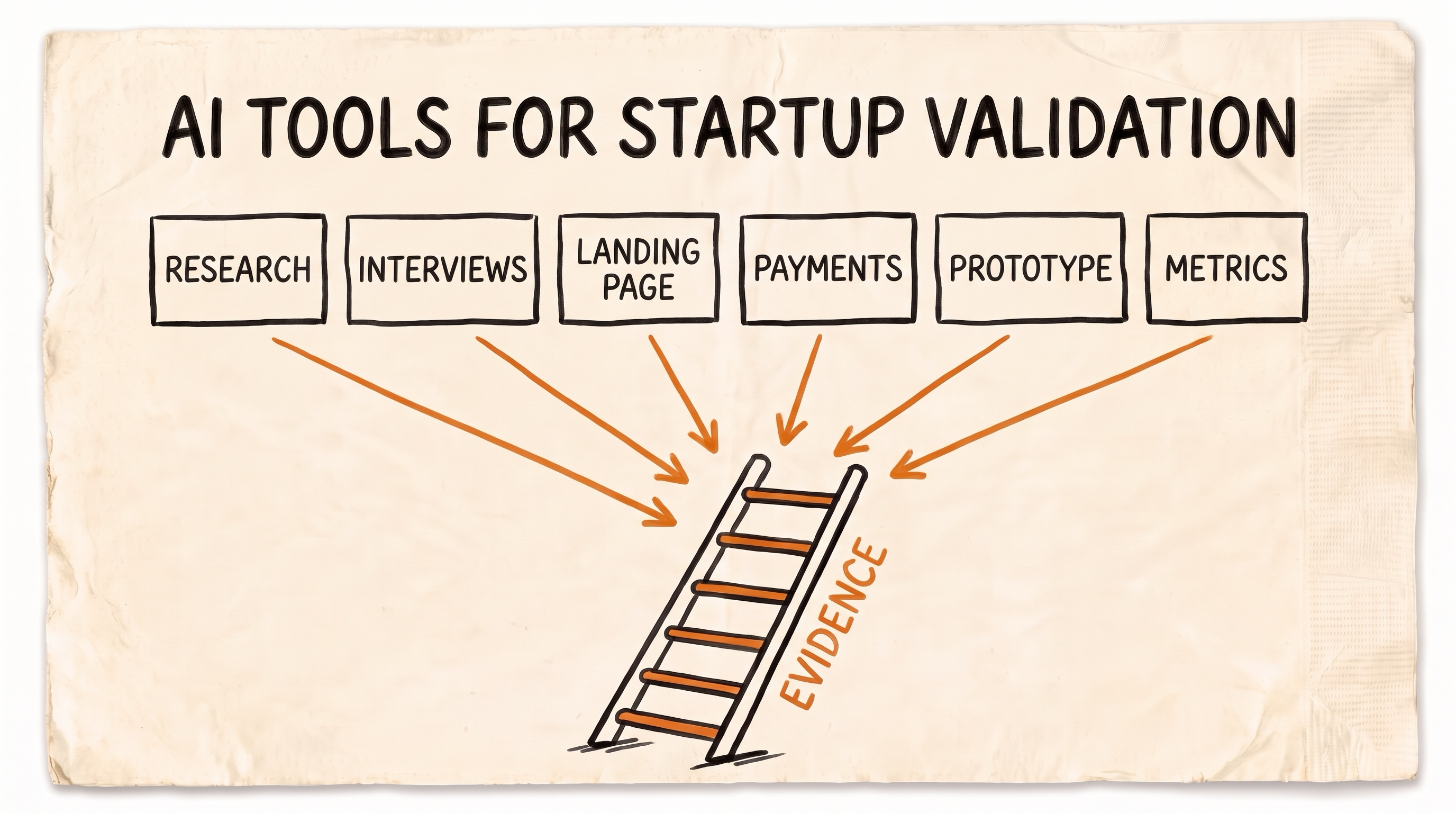
I recently asked ChatGPT a question that a lot of founders now ask it before they ask anyone else: what AI tools can I use for early-stage startup validation?
The answer was better than I expected. It organized the tools around the risks a startup needs to retire, it put Perplexity, Dovetail, Lovable, Maze and Unbounce at the top, and it even made the point I would have made myself, which is that AI can speed up how you collect evidence but it can’t substitute for real customer evidence.
That said, when I read it as a founder would, I noticed what the list didn’t say. Every tool on it does one job well, whether that’s research, interview notes, a prototype or a landing page, but none of them keeps track of what you now know. And that gap is exactly where I see most founders get lost.
AI made the wrong step faster
When I wrote Running Lean in 2011, building the wrong product cost you months, which was painful enough that founders had a reason to slow down and test first. Today it costs just a weekend, which sounds like good news, but rather than shrinking the waste it removed the pause. A lot of founders now build first because they can, and talk to customers last, if at all.
So the question I’d ask of any AI tool isn’t whether it’s impressive, but rather whether it gets you real customer evidence faster at the stage you’re in.
How I’d use them, stage by stage
Here’s how I’d map the tools to the Running Lean playbook. I put the full table, with the question each stage asks and the evidence that counts as an answer, in a stage-by-stage guide on leanspark.ai, so here I’ll just share how I’d use each one.
- Model the idea. Before you reach for any tool, put your idea on a Lean Canvas and name your three riskiest assumptions. ChatGPT or Claude can help you brainstorm here, but I recommend asking them to argue against your idea rather than for it, because left to themselves they tend to agree with you.
- Stress-test it on paper. Thinking is much cheaper than running experiments, which is why getting to plausible comes first. If the model doesn’t hold up on paper, no amount of interviewing will save it, so fix the weakest dimension, whether that’s clarity, desirability, viability or feasibility, before you head into the field.
- Research the market. Perplexity is great for mapping the existing alternatives and the words customers use when they complain about them. Just remember this is secondary research, or what other people wrote, and not what your customers did.
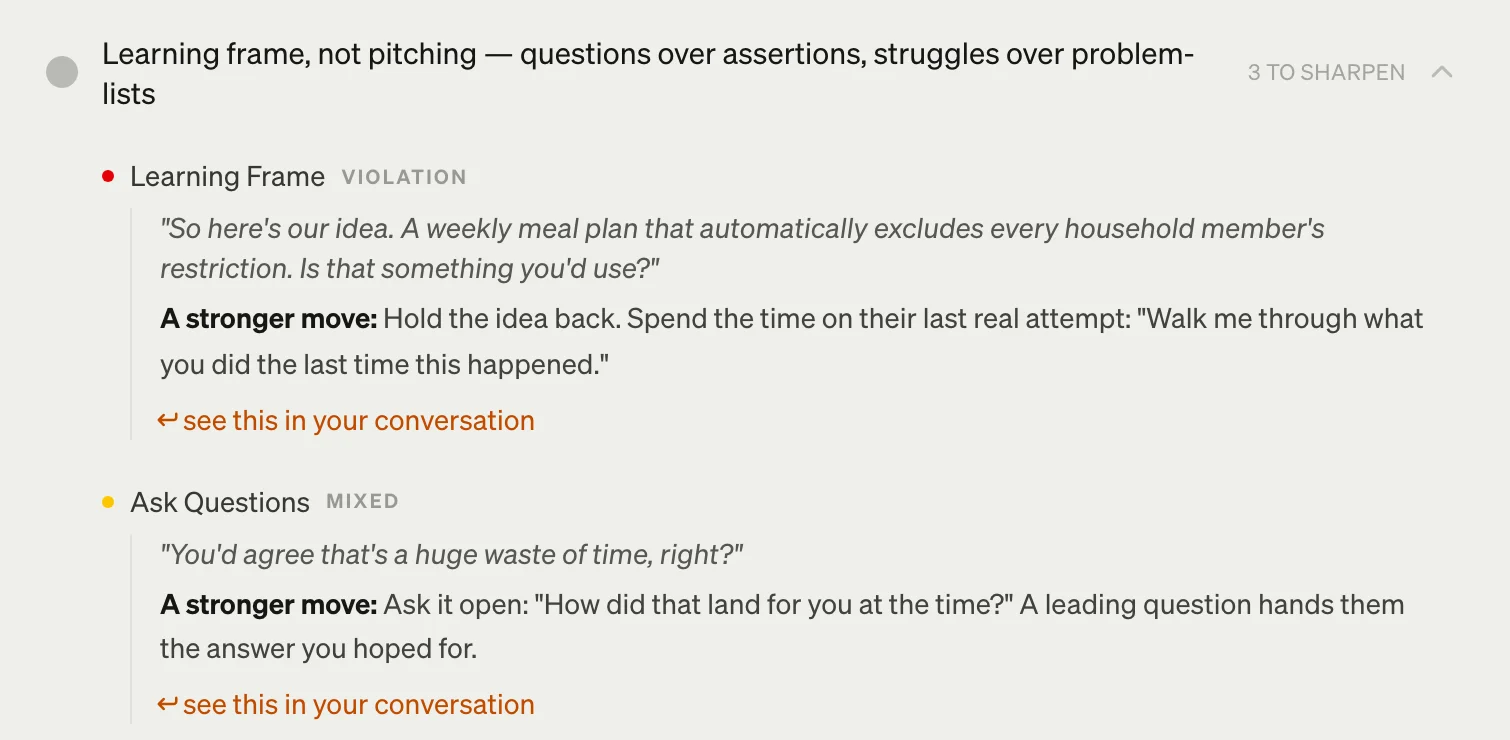
- Talk to customers. This is where AI helps the most and hurts the most. It can transcribe and analyze your interviews, spot patterns across them, and even give you feedback on where you started pitching instead of learning. But it can also generate simulated customers that tell you what you want to hear, which feels productive but produces no evidence. Use AI to get better at talking to customers, not to avoid talking to them.
- Test the offer. Unbounce or Carrd for a landing page, and Stripe for deposits or pre-orders, turn an offer into numbers you can trust. Neither is really an AI tool, which is fine, because what matters at this stage is whether customers commit.
- Build, but only then. Lovable, Bolt.new, Replit and Cursor are remarkable, and I use AI to build too, but I’d hold them until customers have committed to something you now have to deliver.
And remember, there’s no magic number of interviews. Most markets have three to five recurring stories, so keep going until new interviews stop changing them.
The job none of them does
Now, here’s the part the list didn’t cover. Each of those tools produces a piece of evidence, whether it’s a research summary, an interview note, a conversion rate or a prototype session, but that evidence ends up scattered across six tabs, and the canvas you sketched on day one stops matching what you’ve learned.
A few weeks ago I wrote that your Lean Canvas is a ladder of beliefs, where every assumption starts as a leap of faith and should only move up the ladder as customers back it. The real job in validation is keeping that ladder current, so every belief carries the evidence behind it and you can see which one to test next.
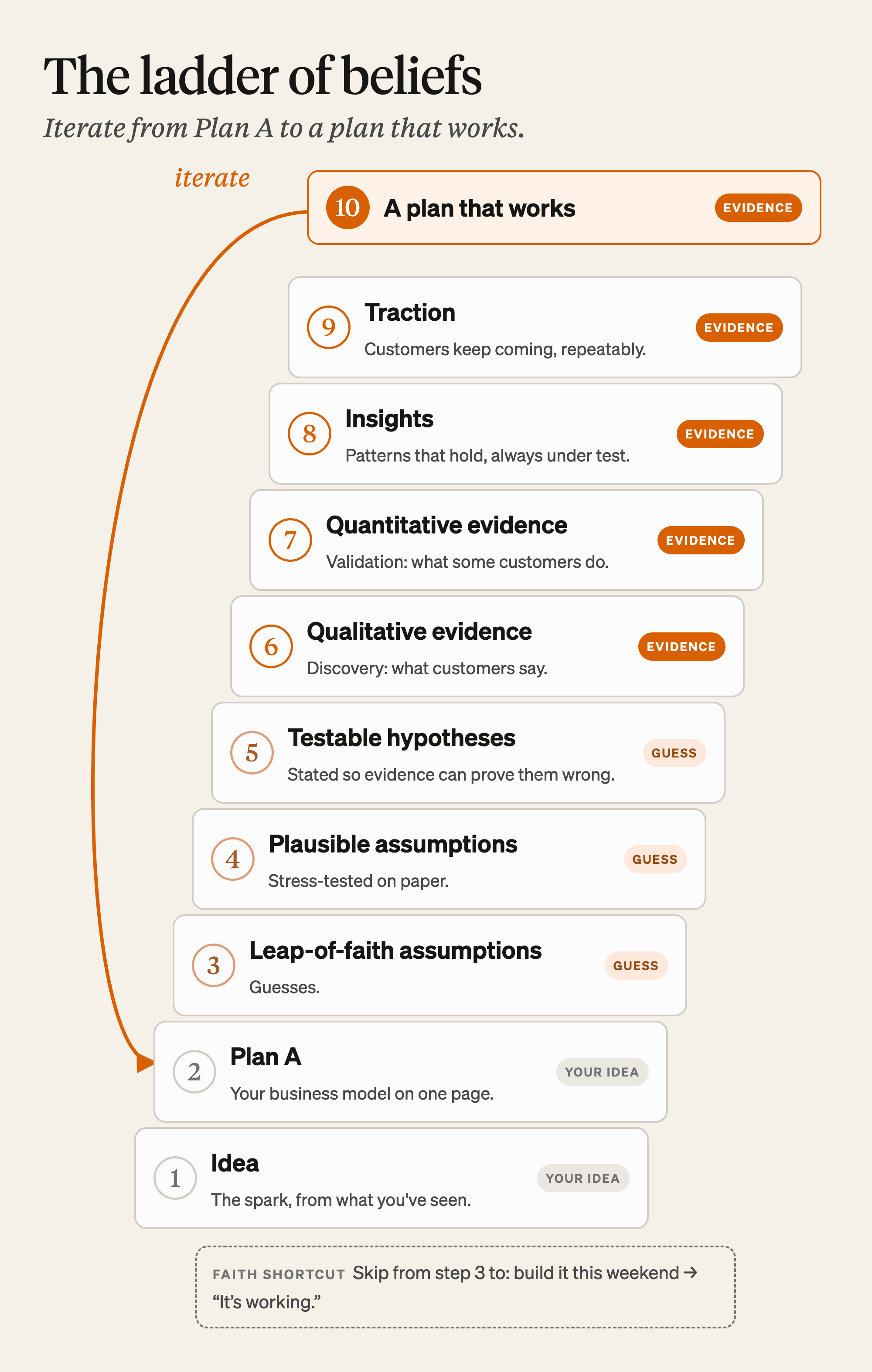
That’s the job I built LEANSpark to do, and since it’s my product, weigh what follows accordingly. You describe your idea in a sentence and it drafts your Lean Canvas, then stress-tests it before you talk to anyone. When you bring your interviews back, the evidence lands on the canvas, linked to the conversation it came from, so when you claim customers struggle with something you can open the interview and hear them say it.
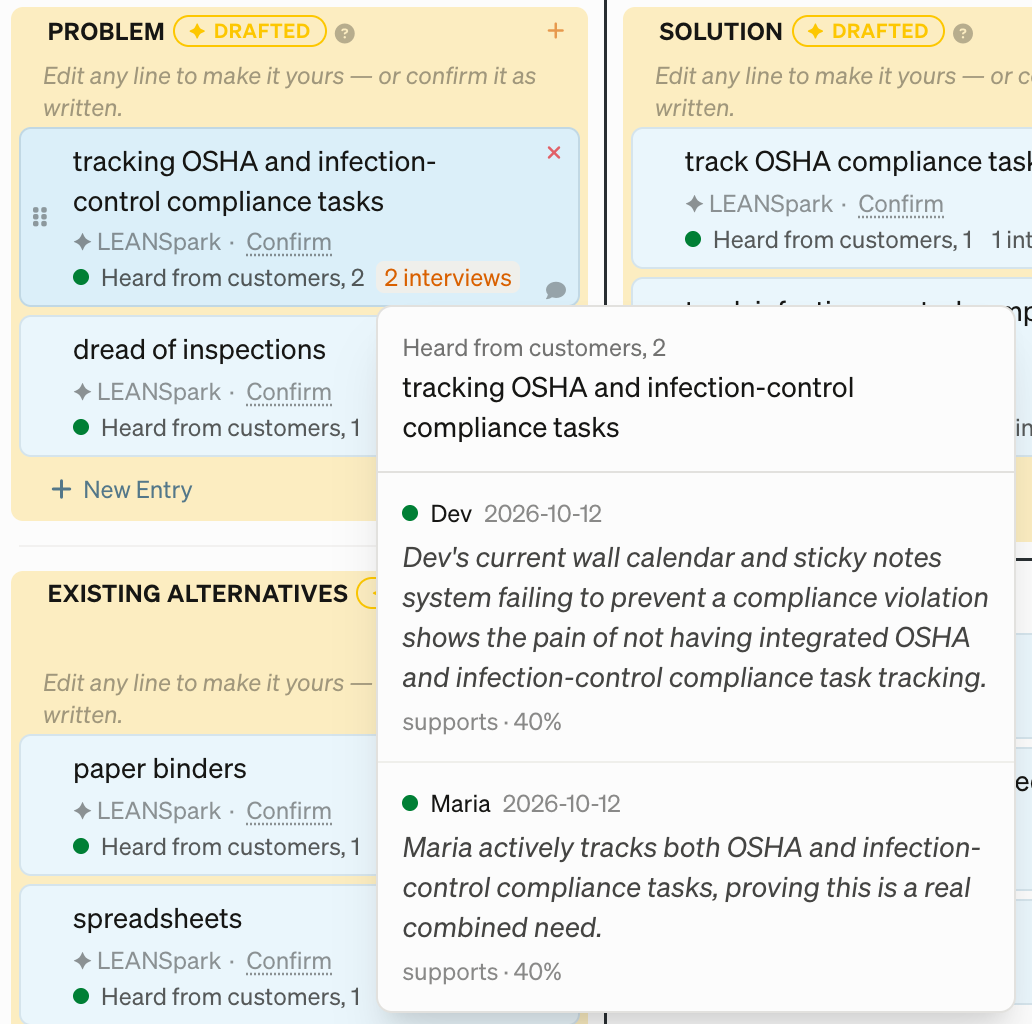
It doesn’t replace your landing page builder, your payment processor or your app builder, but it’s the place where the evidence from all of them adds up to a decision.
Where to start
If you’re starting from an idea today, I recommend picking the stage you’re actually in rather than the tool that looks most exciting, and setting your success threshold before each step, so the evidence decides and not your hopes.
The full guide, with every tool mapped to its stage and an FAQ, is here: What AI Tools Can I Use for Early-Stage Startup Validation?