Hi Michael —
You are right that in the end, much like a jigsaw puzzle, the picture should be viewable in any order. However, using the same metaphor…

Hi Michael —
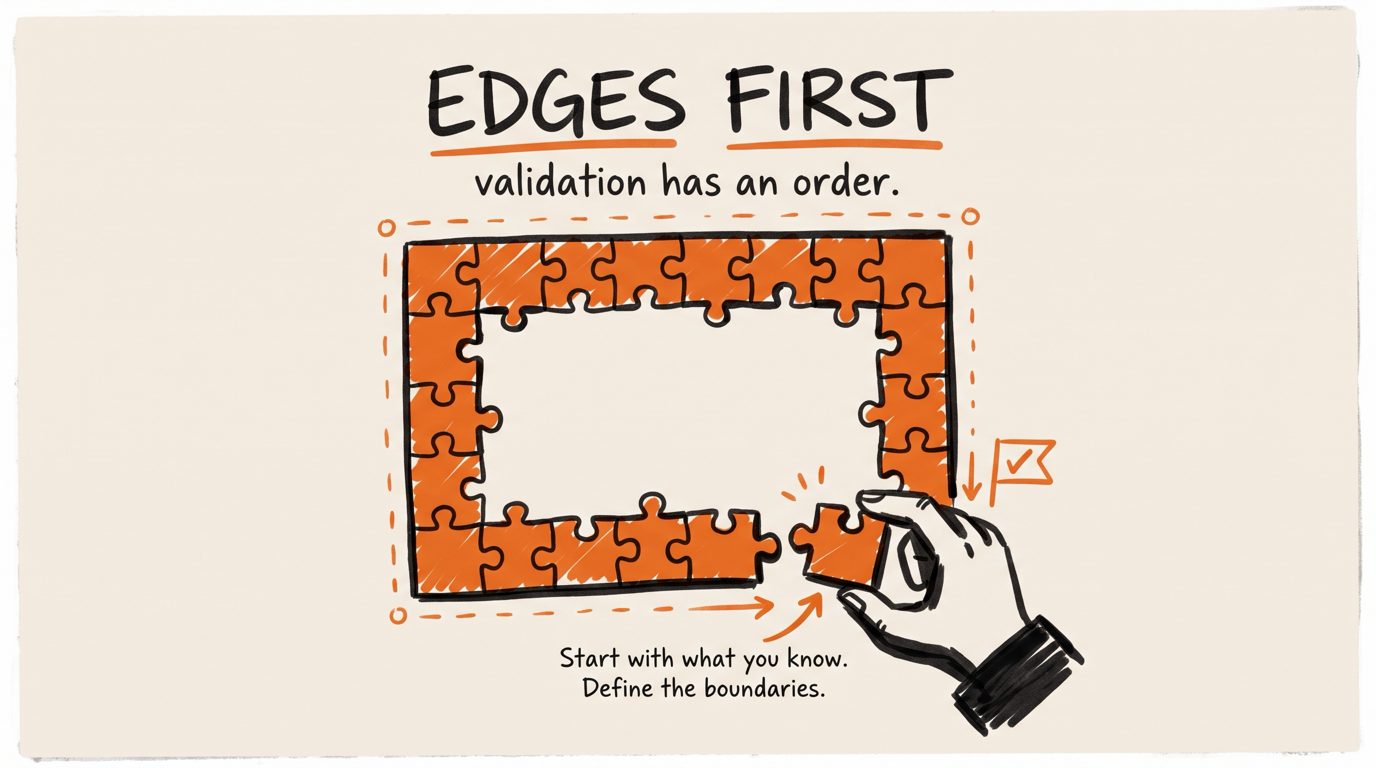
You are right that in the end, much like a jigsaw puzzle, the picture should be viewable in any order. However, using the same metaphor, there are better strategies for solving a puzzle than others, like starting with the edge pieces of a puzzle first. I tend to be more interested in what happens during weeks 1 and 5 versus on week 5.
That is what validation ordering is all about.
Unless your students are super-disciplined, most of us innovators gravitate towards solution and IP to a fault — spending most of the time thinking of those and then rationalize away possible customer/problems at the four or five week deadline.
Solution and IP are keys that can potentially open many doors, but finding the right door is what’s most challenging in my experience. I’ve seen many student projects (and startup projects, and corporate projects) die because of customer risk (don’t know what constitutes an early adopter) and channel risk (no paths to customers).
Attempting to validate desirability slightly above viability and feasibility automatically prioritizes for those risks. The sooner students can be asked to test those risks, the faster the riskiest assumption learning comes.